
How to Create Trending Baseball Reels with ChatGPT and Flow AI
Instagram Reels and YouTube Shorts are crowded with cinematic baseball edits: golden-hour stadium haze, tight reactions in the dugout, and slow push-ins that feel borrowed from broadcast packages. The trend works because it compresses drama into a few seconds while still respecting the sport’s visual language.
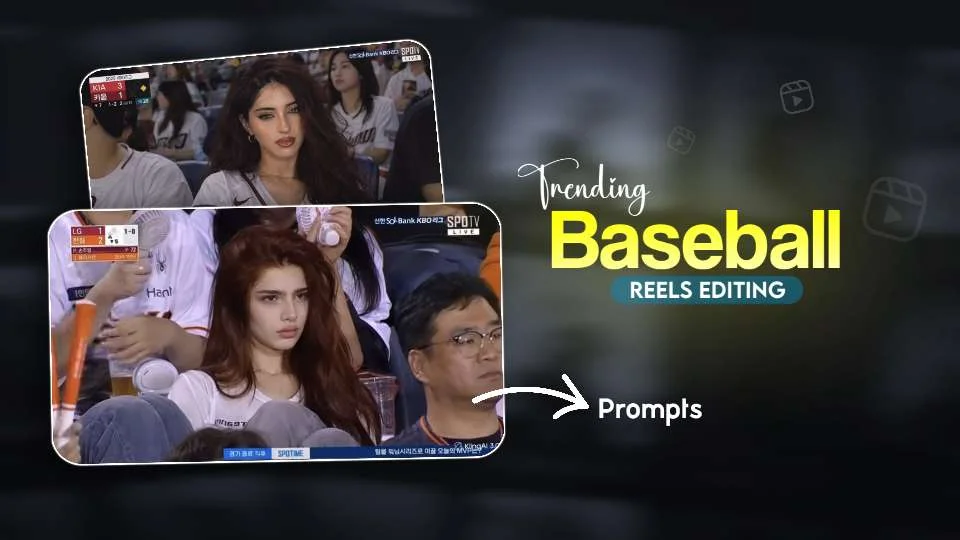
What “cinematic” means for baseball
Cinematic baseball is not random slow motion. It is a predictable toolkit: long-lens isolation on the pitcher’s grip, a wide establishing shot with visible depth-of-field falloff, rack focus to a coach’s call, and crowd layers that sit behind the subject in depth—not pasted on top. When you brief AI, name the focal length behavior you want (for example, 135mm compression on faces versus 24mm environmental distortion) so the model does not default to a generic “movie look.”
Lighting is equally specific. Day games need hard sun with controlled speculars on helmets; night games need practical stadium lamps with plausible spill on skin and fabric. If you skip those cues, you get plastic grass and neon grasslines that break on mobile compression.
Story beats that survive the first second
Viral sports reels reward a three-beat arc: anticipation, release, and aftermath. For baseball, anticipation can be a close-up of chalk dust, a catcher framing a sign, or a batter adjusting gloves. Release is the swing or pitch tunnel. Aftermath is crowd collapse, bat flip restraint, or a slow exhale in the dugout. Write your beats as timestamps so your edit app or template tool has measurable anchors.
Copy-ready ChatGPT brief (storyboard + captions)
Flow-style planning without losing execution speed
“Flow” thinking is simply parallelizing tasks: generate storyboard and captions while your editor collects stock plates or licensed game footage. Keep a running “do-not-hallucinate” list—extra fingers on gloves, impossible bat angles, or duplicated crowd clones—so your QC pass is mechanical instead of subjective.
Export notes that keep the trend honest
Social codecs punish noisy shadows and micro-shimmer on grass. Add mild halation only if you can control it; otherwise, prefer clean contrast and let motion carry the drama. If you add typography, use a single strong font and avoid outline stacks that vibrate at small sizes.