
Instagram Trending Miniature Portrait — ChatGPT Viral Prompt Photo Editing 2026
The miniature portrait trend exaggerates head scale, shrinks torso and limbs, and borrows tilt-shift depth cues so the subject reads like a detailed figure in a small world. The best examples keep facial identity anchors intact—eye spacing, nose asymmetry, freckles—while letting wardrobe simplify into toy-like volumes.
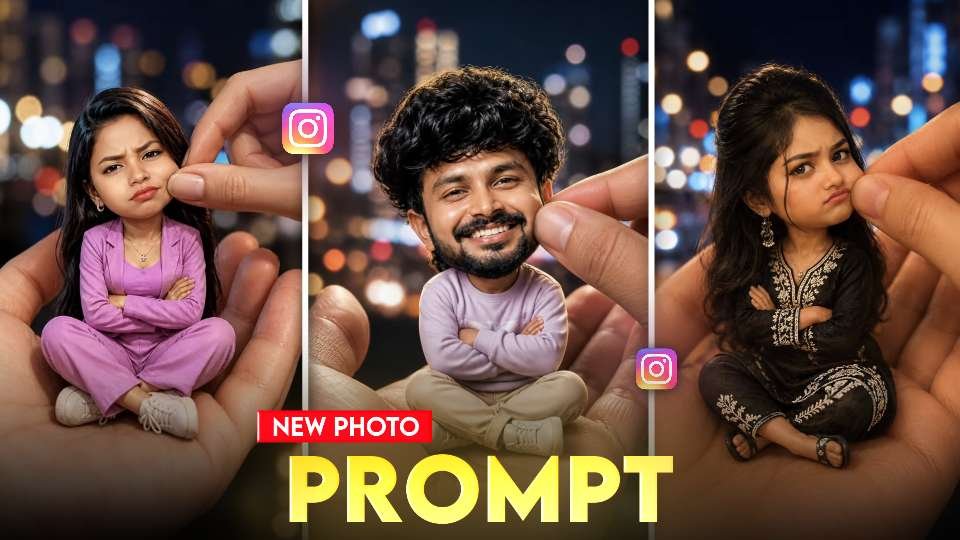
Scale rules that avoid “bobblehead by accident”
Decide your scale ratio up front (for example, head height 1.35× relative to a classic portrait) and enforce consistent perspective on props. If the desk, phone, or coffee cup does not share the same vanishing lines as the floor plane, the illusion collapses. ChatGPT can help you write a micro-brief for props with exact relative sizes (“cup height ≈ 0.35× head height”).
Depth cues that sell the miniature look
Miniature fakes need selective blur that respects depth layers: sharper midground where the subject stands, slightly softer foreground objects, and gentle atmospheric perspective in the far background. Avoid global blur; it reads as portrait mode mistakes rather than intentional diorama photography.
Copy-ready ChatGPT brief
Sound and motion if you animate
If you turn the still into a reel, add one parallax layer only—foreground plant or window frame—so motion does not tear edges. Keep camera movement slower than you think; miniature vibes read better with calm pushes than whip transitions.